
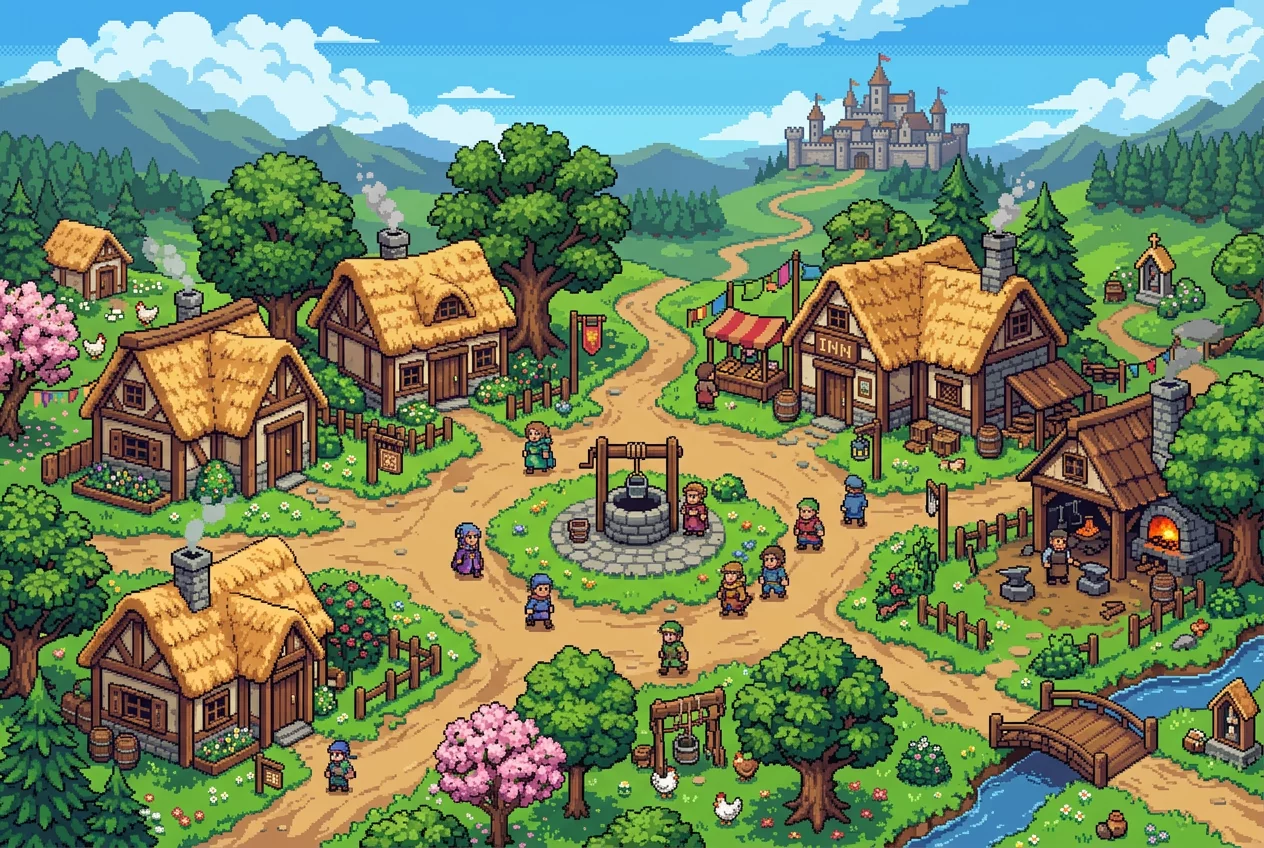
There is an undeniable allure in a world constructed from simple colored squares. In the golden age of 16-bit gaming, developers had to be wizards of suggestion. When hardware limited the number of colors on screen, every single pixel had to earn its place. This constraint didn't limit creativity; it acted as a catalyst for it. It created a unique visual language where a few flickers of orange and red represented a roaring campfire, and a tiny blue dot could be a hero's determined eye.
The Crown of Visual Imagination
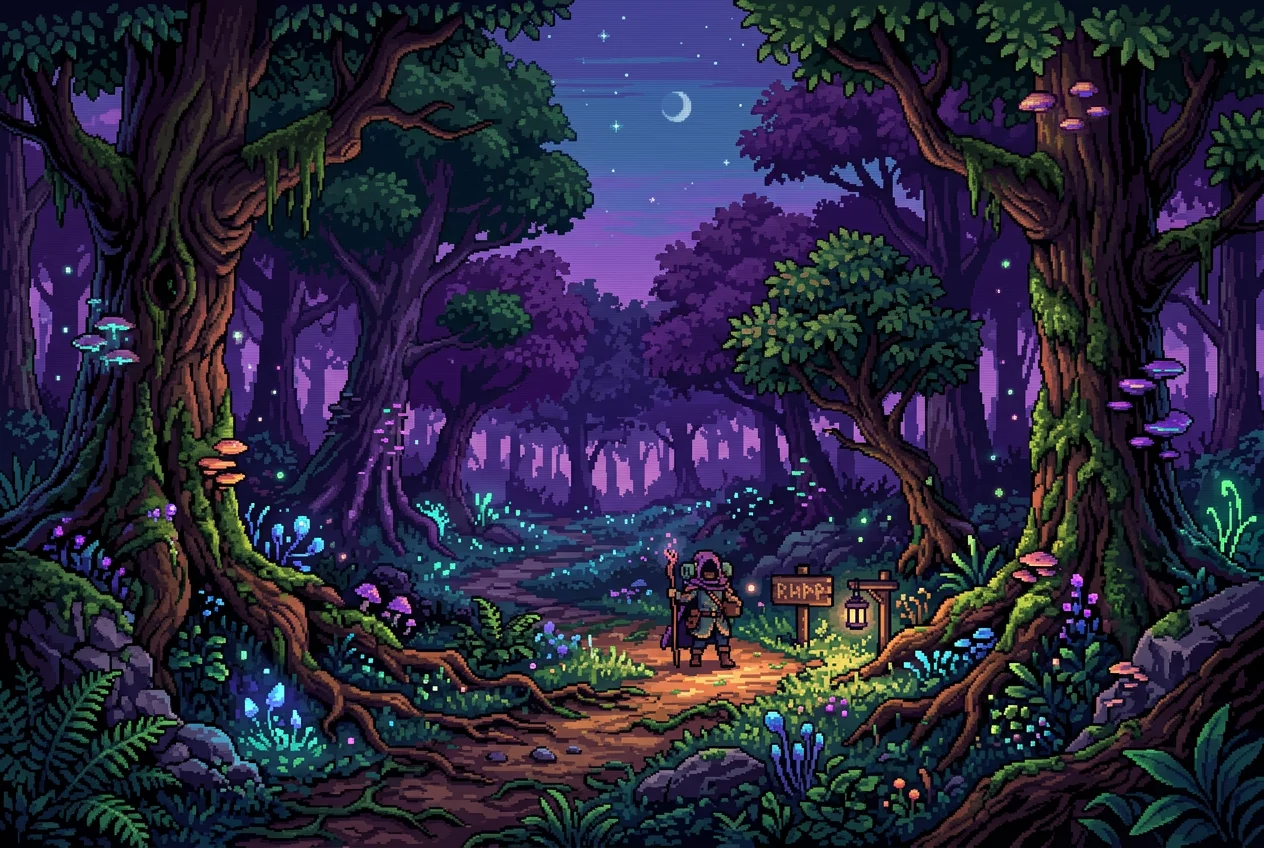
Unlike the hyper-realistic graphics of today, pixel art invites the player to be a co-creator of the experience. Your brain fills in the gaps, smoothing the edges of a blocky knight into a noble warrior and turning a simple green forest into an endless, mysterious woods. This partnership between the screen and the mind is what makes retro roleplaying so intensely personal. The crown of the genre truly belongs to the titles that understand how to use these limitations to build atmosphere.
Beyond Nostalgia: Why We Still Play
While nostalgia plays a role, the modern survival of pixel art isn't just about looking back. Indie developers today choose this style because it is a distinct artistic medium. It allows for a specific type of clarity in gameplay. When every sprite is distinct, the tactical layers of a turn-based battle or the complex paths of a dungeon become readable at a glance. It strips away the visual noise of modern rendering, letting the story and the mechanics shine brightly.
"Pixel art is not a limitation; it is a choice to focus on the soul of the adventure rather than the count of the polygons."
The Enduring Legacy
Whether it is the rhythmic walking animation of a party traversing a world map or the dramatic screen flash of a critical hit, these small details create a rhythm that is hypnotic. As we continue to see modern RPGs embrace these retro roots, it becomes clear that the 16-bit grid is a timeless canvas. It provides a sense of warmth and accessibility that is hard to replicate in three dimensions.

Discussion
Phil D.
June 7, 2026Beautiful pixel graphics. It reminds me exactly why I started playing these games in the first place.
Leave a comment